





For most affluent buyers, the conversation about moving to Florida starts with taxes. That's a reasonable place to begin, but it's not nearly the full picture. Smart moving to Florida financial planning covers considerably more ground than a single line item on a return. It involves domicile strategy, a realistic look at insurance costs, updated estate structures, and a clear understanding of the lifestyle expenses that come with luxury coastal living. Florida genuinely rewards thoughtful planning. The risk is in treating this as a simple address change rather than the comprehensive financial decision it actually is.
Why Florida Continues to Draw Affluent Buyers
Florida's financial case is well established and continues to strengthen. The state levies no personal income tax, no estate tax, and no inheritance tax, which means a household relocating from New York or California can eliminate a significant layer of annual state-level taxation. For families with substantial investment income or estate value, those savings compound considerably over time.
The lifestyle reinforces the financial case on its own terms. Golf communities, waterfront estates, private clubs, and year-round climate create a quality of life that makes the move compelling beyond the tax math. Florida's luxury housing market has reflected this sustained demand consistently, with affluent relocation buyers continuing to drive activity across the state's most sought-after communities.
Establishing Florida Residency and Domicile
This is where a lot of high-net-worth relocators make costly mistakes. Simply purchasing a Florida property is not enough to establish domicile. Former high-tax states often audit departing high-income earners closely, and documentation gaps create real exposure.
Domicile is fundamentally about intent. Florida must become your true, fixed, and permanent legal home, and proving that requires consistent, documented evidence across multiple areas of your life. A thorough domicile transition covers several key steps.
- Spending more than 183 days per year in Florida (per Florida domicile law)
- Obtaining a Florida driver's license and vehicle registration
- Updating voter registration to a Florida county
- Moving primary bank accounts and financial relationships to Florida
- Filing a Declaration of Domicile with your county clerk
- Updating all estate documents to reflect Florida law
Leaving any of these steps incomplete creates audit exposure that can undermine the entire financial benefit of the move.
The Florida homestead exemption adds a meaningful property tax benefit once domicile is properly established. Per Florida Statute 196.031, it reduces assessed value by up to $50,000 for primary residence owners.
Florida's Save Our Homes provision caps annual assessed value increases at 3% or the Consumer Price Index, whichever is lower. For buyers in appreciating coastal markets, that protection adds real long-term value.
Key Financial Planning Considerations Before You Move
| Consideration | Why It Matters |
|---|---|
| Residency status | Affects tax treatment and audit exposure |
| Insurance costs | Varies significantly by region and property type |
| Estate planning | Requires legal updates to align with Florida statutes |
| Community lifestyle | Shapes long-term satisfaction and daily quality of life |
| Property ownership structure | Critical for homestead eligibility and wealth planning |
| Seasonal living patterns | Directly affects domicile compliance |
Tax Strategy That Goes Beyond Income Tax
The income tax savings get most of the attention, but the full tax picture is more nuanced. Florida residents remain subject to federal taxation, and multi-state tax exposure can be a real issue for business owners or those who maintain financial ties to a former state. The timing of your domicile establishment relative to a business sale, major liquidity event, or significant capital gain can have material consequences. Working with a CPA and estate attorney who specialize in multi-state domicile before the move is not optional at the high-net-worth level.
Insurance and Coastal Risk Planning
Florida's coastal properties are extraordinary, and their insurance costs reflect the exposure that comes with that location. According to 2025 Florida Office of Insurance Regulation data, statewide homeowners insurance averages between $3,800 and $6,000 annually. Luxury properties in coastal markets run considerably higher.
For a $2 million home in Collier County, 2025-2026 market estimates put annual homeowners premiums at $25,000 to $38,000. These figures are representative and vary based on construction year, roof condition, wind mitigation features, and carrier. Flood and windstorm policies are typically structured as separate layers and add to the total.
Budgeting for this full insurance stack is part of accurate relocation planning. The numbers vary meaningfully by county, which makes regional comparison an important early step.
Estate and Wealth Transfer Planning
Relocating to Florida creates a valuable window to revisit your full estate plan. Wills, trusts, powers of attorney, and asset titling that were structured under another state's laws may not align cleanly with Florida statutes. Florida's absence of estate and inheritance taxes makes it one of the most favorable environments in the country for multigenerational wealth transfer, but capturing that benefit requires proper legal alignment.
The relationship between the homestead exemption and trust structures deserves particular attention. Certain trust arrangements can affect homestead eligibility, so coordinating with a Florida estate attorney before finalizing your property ownership structure is a step worth taking early.
Understanding the True Cost of Luxury Living in Florida
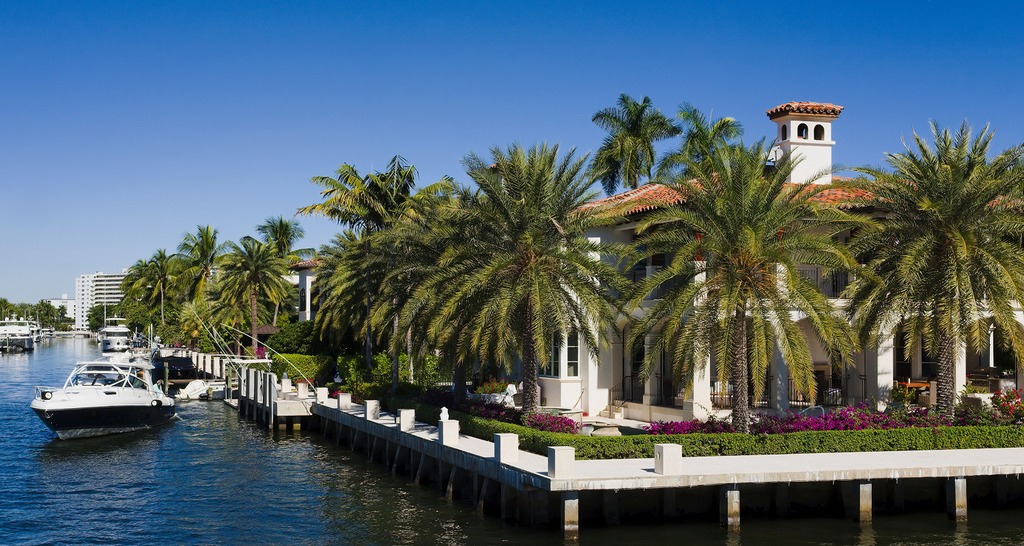
Ongoing carrying costs deserve as much attention as the purchase price itself. Initiation fees at top South Florida private clubs range from $50,000 to over $150,000, per publicly available membership data. Some ultra-exclusive communities require considerably more.
Property tax rates also vary by county in ways that affect long-term ownership economics. For buyers comparing communities across regions, understanding ownership costs across Southwest Florida alongside similar analyses for South Florida markets gives a more complete financial picture before committing to a specific location.
Choosing the Right Florida Market for Your Financial Goals
Florida's major luxury markets each carry a distinct financial and lifestyle profile.
Naples and the Gulf Coast attract buyers drawn to golf-oriented resort communities and a quieter, more private pace of coastal living. Insurance costs in coastal Collier County are among the state's highest, but the lifestyle and sustained property values reflect a market with deep, enduring demand. Palm Beach and the Jupiter corridor offer legacy prestige and estate-scale properties within an established private club culture. Buyers researching private golf communities across South Florida will find this corridor delivers the strongest concentration of championship golf and historic residential exclusivity.
Miami appeals to an internationally-oriented buyer drawn to contemporary architecture and urban waterfront energy. Sarasota offers arts, cultural depth, and coastal elegance with insurance costs generally lower than Gulf-front Collier County markets. For those ready to take a closer look at specific communities, working with a buyer's specialist in Southwest Florida who understands both the market and the lifestyle is a natural next step.
Planning a Florida Lifestyle That Supports Long-Term Wealth
The most financially successful Florida relocations share something in common. They're approached as complete lifestyle transitions, coordinated across tax, legal, insurance, and real estate planning rather than handled in disconnected pieces. Buyers who build lasting satisfaction here tend to be the ones who understood early on that the choice of community is as important as the financial structure surrounding it.
At Gulf and Greens Luxury, our work spans Southwest Florida's premier luxury communities, and we understand how meaningfully location choice and lifestyle alignment affect the long-term experience. If you're thinking seriously about a Florida move, feel free to connect with our team and have an honest conversation about what this market actually looks like from the inside.
Frequently Asked Questions
What financial factors should you consider before moving to Florida?
The most important factors are domicile strategy, coastal property insurance, estate plan updates, multi-state tax exposure, and carrying costs of luxury community living. Working with Florida-specialized legal and financial advisors before the move is essential, not optional.
How do you establish Florida residency for tax purposes?
Domicile requires spending more than 183 days per year in Florida and documenting genuine intent. This means a Florida driver's license, updated voter registration, a Declaration of Domicile, moved financial relationships, and estate documents aligned with Florida law.
Is moving to Florida beneficial for high-net-worth individuals?
For most high-net-worth households, yes. Florida has no state income tax, estate tax, or inheritance tax. A household relocating from a high-tax state can eliminate significant annual state-level taxation, and those compounded savings over time are substantial.
What insurance costs should homeowners expect in Florida?
Per 2025 Florida OIR data, statewide homeowners insurance averages $3,800 to $6,000 annually. Luxury coastal properties run considerably higher, with a $2 million Collier County home carrying an estimated $25,000 to $38,000 per year. Flood and windstorm policies are typically separate.
Does Florida have estate or inheritance taxes?
Florida imposes no estate tax and no inheritance tax. This makes it one of the most favorable states for multigenerational wealth planning, particularly for families relocating from states with their own estate taxes.
What is the Florida homestead exemption?
Per Florida Statute 196.031, the homestead exemption reduces assessed value by up to $50,000. Florida's Save Our Homes provision caps annual increases at 3% or the Consumer Price Index, whichever is lower. Apply by March 1 with your county property appraiser.
How long do you need to live in Florida to establish domicile?
Spending more than 183 days in Florida is foundational but not sufficient alone. Domicile is about demonstrating genuine intent through documented action across driver's license, voter registration, financial relationships, and estate documents. The process is multidimensional, not just a day count.
What are the hidden costs of moving to Florida?
The most commonly underestimated costs are private club initiation fees, coastal homeowners insurance, windstorm and flood coverage, waterfront maintenance, HOA fees, and property taxes that vary significantly by county. Budgeting for the full cost of luxury living is critical to accurate planning.
Which Florida cities are most popular for luxury relocation?
Naples, Palm Beach, Jupiter, Miami, and Sarasota consistently attract affluent buyers. Naples and Palm Beach draw buyers seeking private golf and waterfront living. Miami appeals to internationally-oriented buyers, while Sarasota offers coastal sophistication at a slightly more accessible price point.
Should estate plans be updated after moving to Florida?
Yes, and ideally before or concurrent with the move. Wills, trusts, powers of attorney, and asset titling vary by state, and documents prepared under another state's laws may not align with Florida statutes. A Florida estate attorney should review the full plan as part of the relocation process.
Check out this article next